A diagram can explain a concept. A good interactive website lets you move it around until the concept finally makes sense. That is especially useful for science, where size, motion, time, and invisible forces are hard to show on a flat page.
These science websites let you build molecules, launch asteroids, change physical conditions, and travel across enormous scales. They are useful for students, but none of them feels like homework first.
1. Historical Tech Tree
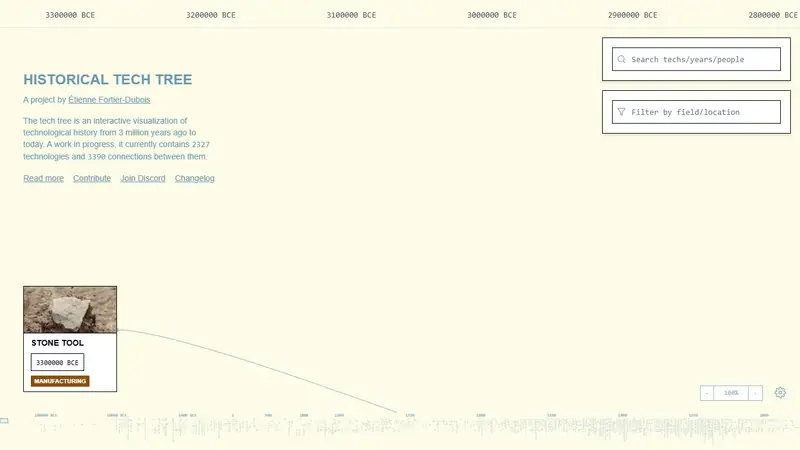
Historical Tech Tree maps the development of technology as a network of connected ideas. You can follow tools, materials, inventions, and discoveries across thousands of years instead of reading history as a straight list of dates.
The connections are the interesting part. A familiar object can lead backward through several technologies you may never have thought about together.
2. Atomency
Atomency is a browser chemistry and physics lab. Build molecules, inspect VSEPR geometry, work with gas laws, test reactions, and explore nuclear decay without setting fire to an actual classroom.
It packs many tools into one place, so start with a single experiment rather than trying to understand the entire menu at once.
3. PhET
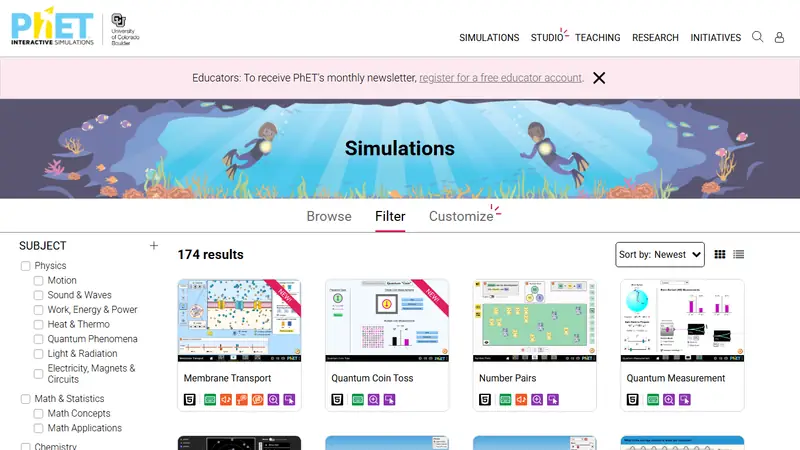
PhET has a large library of interactive science and math simulations from the University of Colorado Boulder. Subjects include physics, chemistry, earth science, biology, and mathematics, with filters for age and topic.
The simulations are designed for teaching, but they also reward casual poking. Change a variable and the model reacts immediately.
4. Ptable
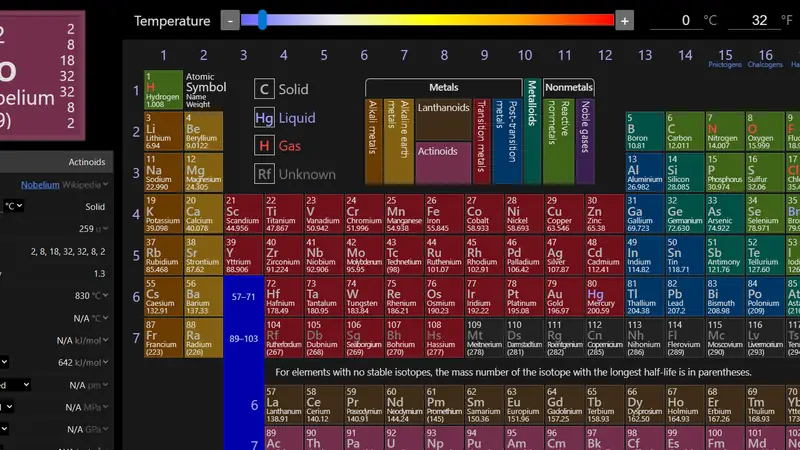
Ptable turns the periodic table into a working research surface. Select an element to inspect properties, isotopes, electrons, oxidation states, and trends across the table.
It is dense, but it is much easier to explore than a static chart. You can move from one question to the next without opening ten tabs.
5. Scale of the Universe
Drag from the smallest known scales to galaxies and the observable universe. Objects appear in relation to one another, which makes familiar facts about size feel much less abstract.
The trip from a person to a planet is already surprising. Keep going in either direction and normal intuition gives up quickly.

6. 100,000 Stars
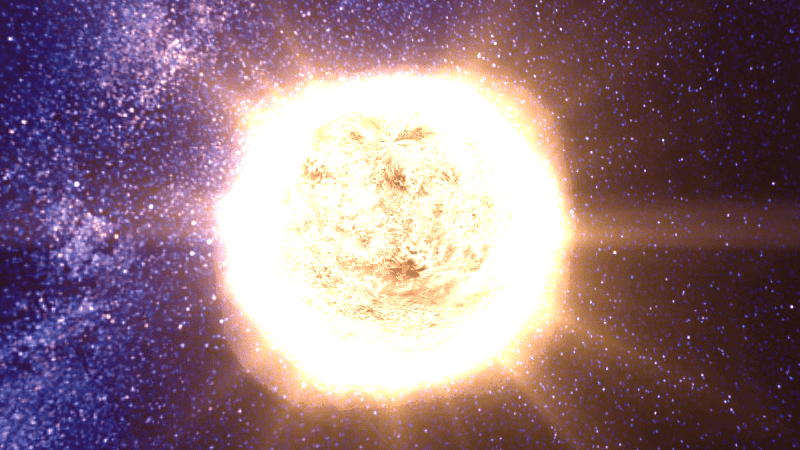
100,000 Stars is a three-dimensional map of our stellar neighborhood. Zoom away from the Sun, rotate the view, and inspect named stars scattered through the local galaxy.
It makes the night sky feel less like a ceiling and more like a place with depth.
7. TrueSize
Flat maps distort countries, especially near the poles. TrueSize lets you drag one country over another part of the globe to see how its apparent size changes.
Try Greenland near the equator, then compare countries you assumed were roughly equal. A minute of dragging can undo years of map-shaped intuition.

8. Asteroid Launcher
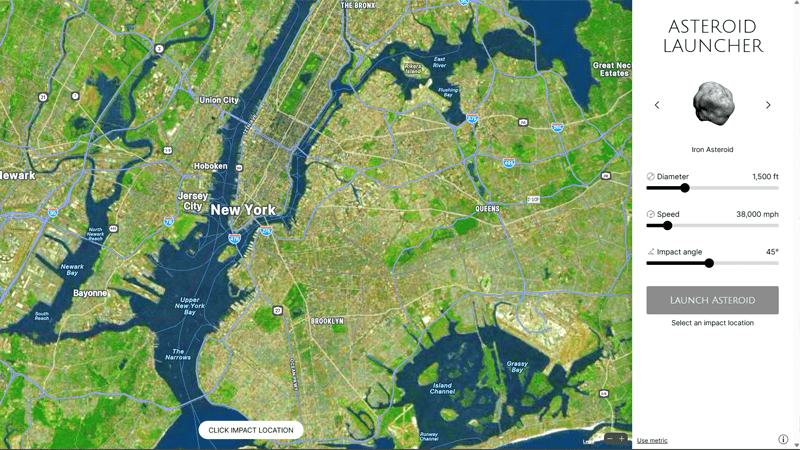
Choose an asteroid, set its speed and angle, then pick a point on Earth. The simulation estimates the crater, shock wave, wind, and other effects of the impact.
It is educational in a slightly alarming way. The numbers become easier to understand once they are attached to a location you know.
9. Earth Wind Map
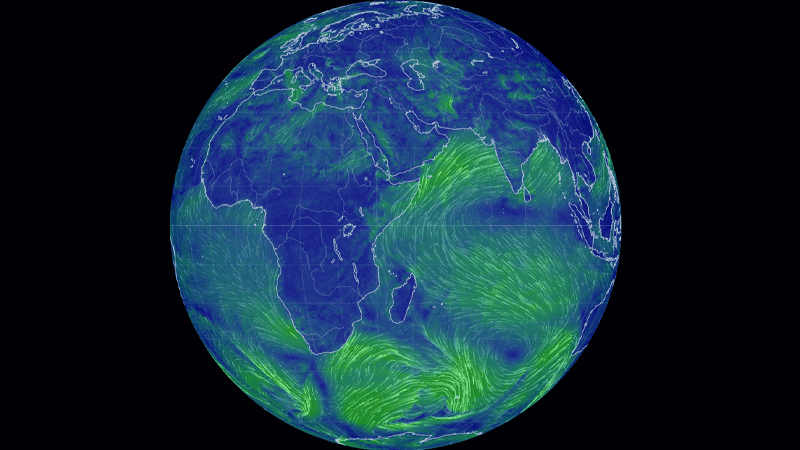
Earth Wind Map visualizes atmospheric motion around the planet. Rotate the globe, switch layers, and watch wind and weather systems form large moving structures.
It is useful for understanding current conditions, but it is also beautiful enough to leave open as a live portrait of the atmosphere.
Explore another subject
Our interesting websites collection has more maps, archives, and visual explanations. For tools you may need more often, see the free online tools worth bookmarking.