A good internet rabbit hole begins with a question you did not know you had. Twenty minutes later you are reading about bread-clip taxonomy, listening to an answering machine tape, or planning a journey to a place that actively does not want visitors.
The sites below reward wandering. There is no need to finish them, and most are better when you follow whatever detail looks oddest.
1. HORG
The Holotypic Occlupanid Research Group classifies the plastic clips found on bread bags. Shapes become species. Tiny manufacturing differences become taxonomic evidence.
The site is funny because it treats the subject seriously, but it is also a genuinely deep catalog. Ordinary packaging will never look quite as anonymous again.

2. The Brick Bible
The Brick Bible retells biblical stories through thousands of photographs of LEGO scenes. The project is far larger and more detailed than the premise first suggests.
You can browse it as illustration, adaptation, craft, or an unusually committed archive of tiny plastic drama.

3. Next-to-impossible Destinations
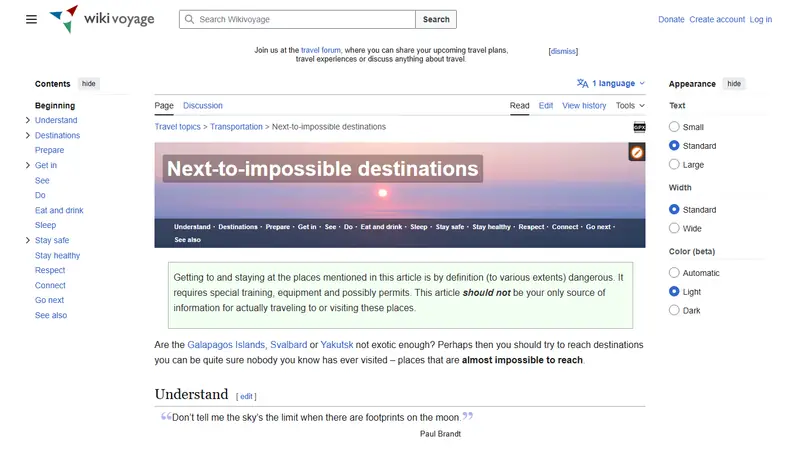
This Wikivoyage guide collects places that are dangerous, restricted, remote, or wildly impractical to visit. Some require permits. Others require money, physical endurance, political luck, or all three.
It is travel reading for destinations you are more likely to explore through tabs than tickets.
4. Historical Tech Tree
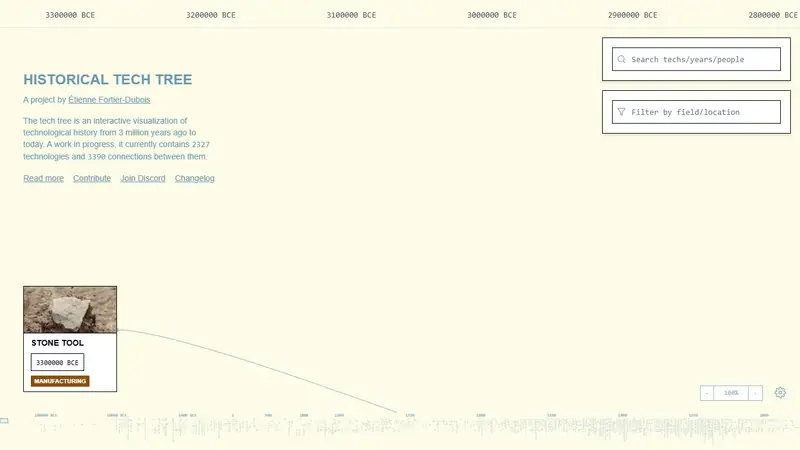
Historical Tech Tree connects inventions to the technologies that made them possible. A familiar device can lead backward through materials, processes, and older tools across a huge span of time.
Pick one modern object and keep tracing its ancestors. The tree becomes much easier to enter when you start with something you use every day.
5. Liminal Earth
Liminal Earth is a crowdsourced map of strange reports: cryptids, local legends, unusual lights, haunted places, and other claims that live outside a normal travel guide.
You do not need to believe every pin. Reading how people describe the strange corners of their own towns is interesting by itself.

6. After The Tone
After The Tone archives found answering-machine tapes. The messages are awkward, mundane, intimate, and full of static from a time before every call arrived with a contact photo.
Listening can feel intrusive, so the site carries an emotional weight that a collection of old devices would not. These are scraps of real voices, not a recreation.

7. PlaneCrashInfo.com
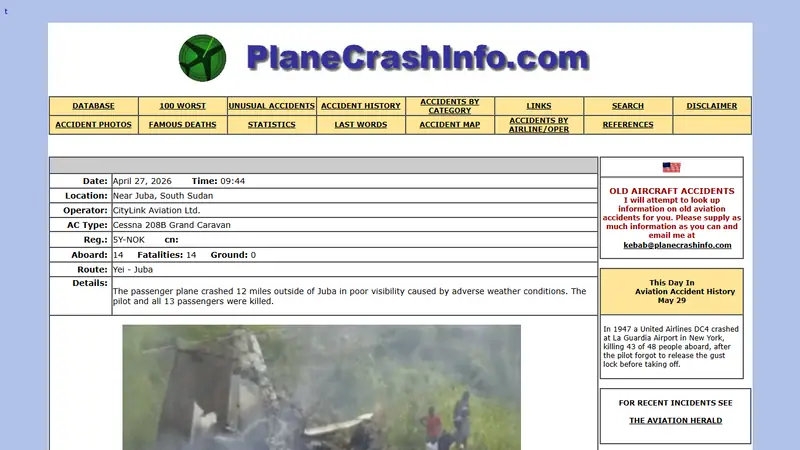
PlaneCrashInfo.com is a long-running reference site for aviation accidents. It contains records, statistics, categories, maps, and historical material in a plain interface.
The subject is grim, and the archive is best approached as reference rather than entertainment. Its depth makes it easy to follow one incident into a much wider history of aviation safety.
8. consumed.today
consumed.today records one person's daily intake of food, writing, music, video, and other media. A single day is modest. Read several and patterns begin to appear.
It is a rabbit hole made from ordinary life, which is refreshing beside archives built around disasters or grand events.

9. Pop Chart
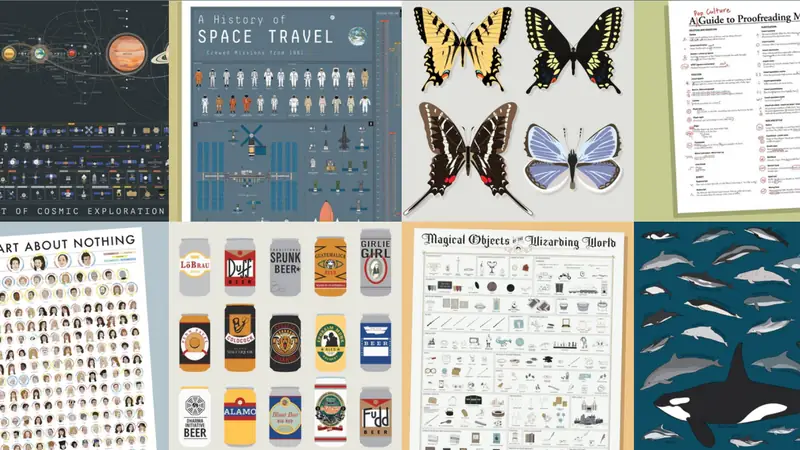
Pop Chart turns large bodies of pop-culture knowledge into detailed posters and charts. Cocktails, sneakers, fictional worlds, music, and film histories are arranged for slow visual inspection.
Even when you are not shopping, the images are dense enough to reward zooming and arguing over what was included.
10. Wiki Roulette
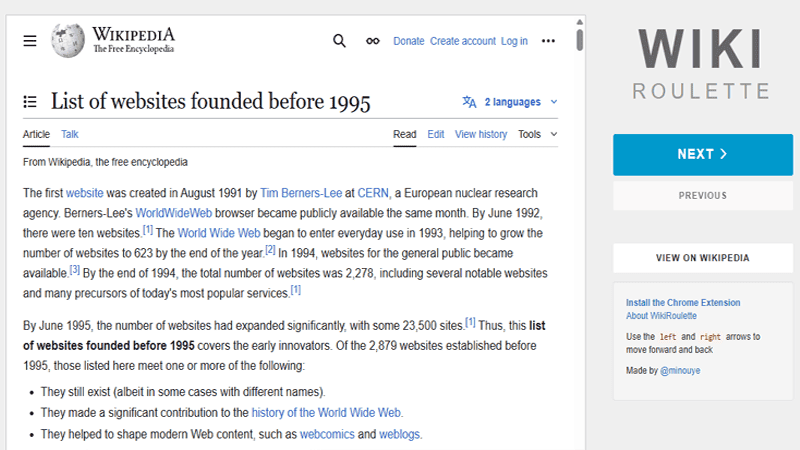
Wiki Roulette is the emergency button for anyone who has reached the end of a rabbit hole and wants another. One click opens a random Wikipedia page.
Most rolls will not be interesting. That makes the good ones feel discovered rather than recommended.
Pick another direction
Find more archives, maps, and peculiar collections under interesting websites. The old web guide is a better next stop when the website itself is the historical object.