Learning online becomes exhausting when every subject begins with a course signup and a promise to transform your life. Sometimes you only want a clear explanation, a short practice session, or one interesting fact before breakfast.
These websites support different kinds of learning. Some are structured platforms. Others are tools and rabbit holes that make curiosity easier to follow.
1. Xikipedia
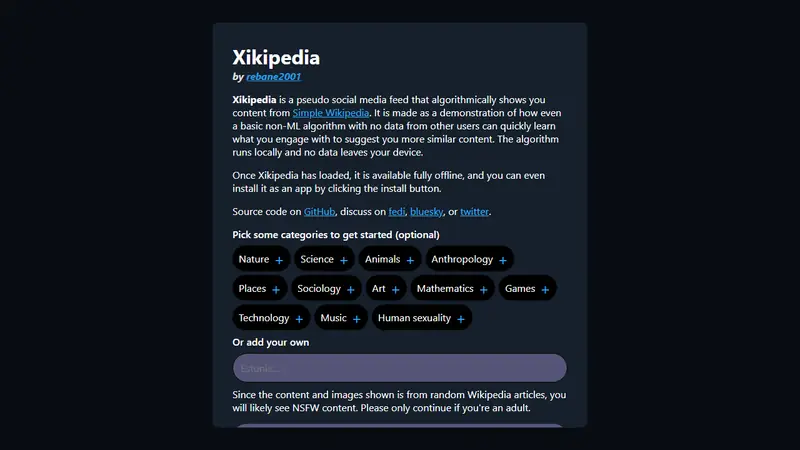
Xikipedia turns Simple Wikipedia articles into a vertical feed. A local recommendation system responds to what you read, so the familiar doomscroll motion starts serving geography, history, science, and other reference material.
It will not replace careful study, but it can redirect an idle habit toward subjects you did not plan to search.
2. Historical Tech Tree
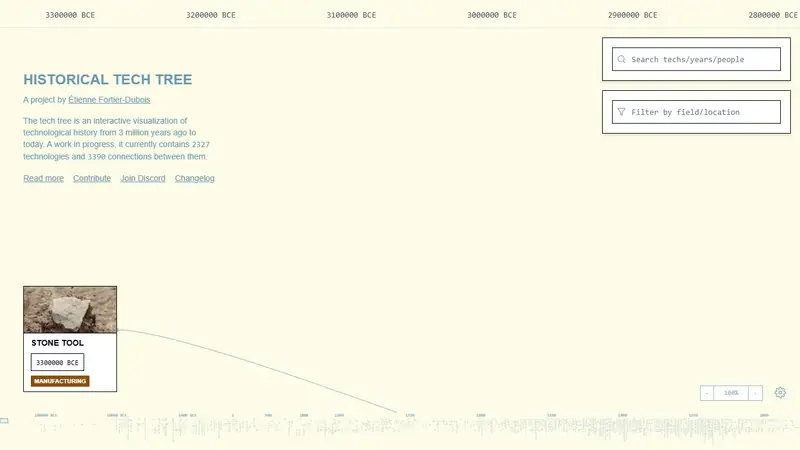
Historical Tech Tree shows how tools and discoveries depend on earlier technologies. Follow one branch backward and a modern object becomes the end of a much longer chain.
It is especially useful for learners who understand relationships better than isolated dates.
3. Learn Anything
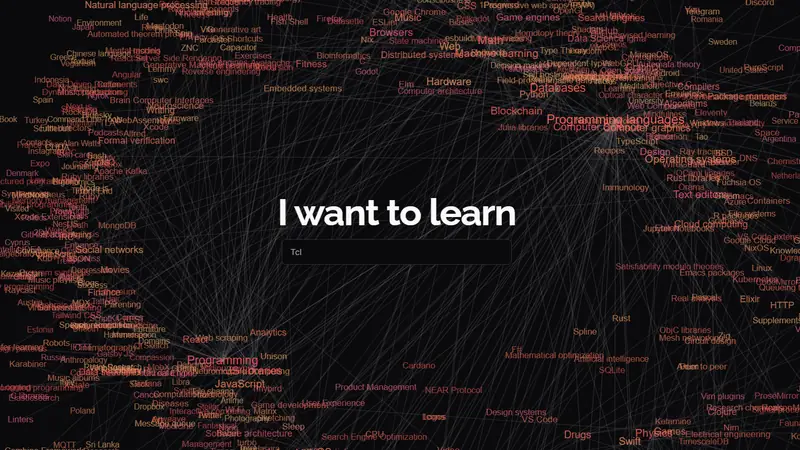
Learn Anything organizes subjects into connected knowledge graphs. Start with a broad topic, inspect its parts, and use the map to decide what should come next.
The site is useful at the beginning of a subject, when you do not yet know the vocabulary needed to search well.
4. PhET
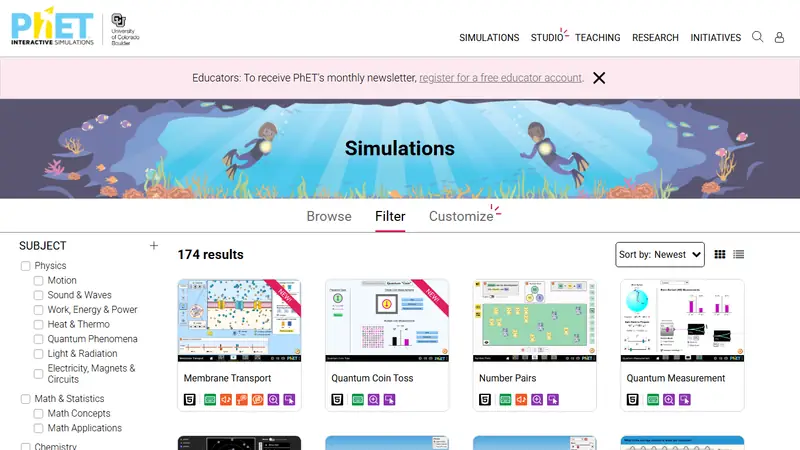
PhET offers free interactive simulations in physics, chemistry, mathematics, biology, and earth science. Change a variable and see the model respond immediately.
The simulations are designed for classrooms, but anyone can use them to test an idea that felt too abstract on paper.
5. Ptable
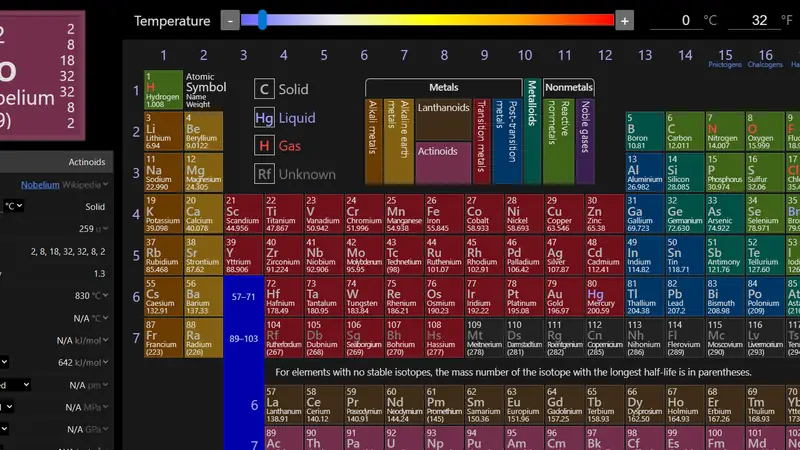
Ptable is an interactive periodic table filled with element properties, isotopes, trends, electrons, and chemistry data. Selecting a view changes the entire table so patterns become visible.
Keep it open beside chemistry work instead of searching each element separately.
6. Animated Knots by Grog
Animated Knots teaches knots through step-by-step photo animations. The collection is organized by activity and knot type, with notes on uses, strengths, and weaknesses.
Practice with a real piece of rope while the animation loops. Watching alone creates confidence that disappears the moment your hands become involved.

7. Forvo
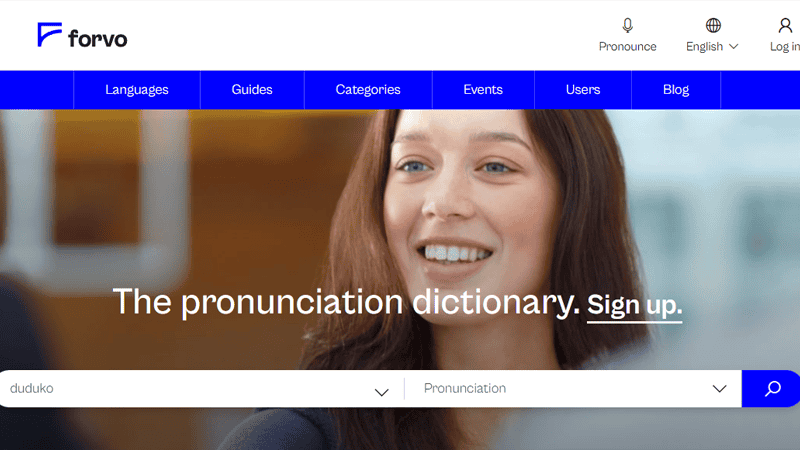
Forvo is a pronunciation dictionary built from recordings by speakers around the world. Search a word or name and compare how people pronounce it in different languages and regions.
It is useful when written phonetics are not enough and a normal dictionary offers only one formal recording.
8. TypeLit.io
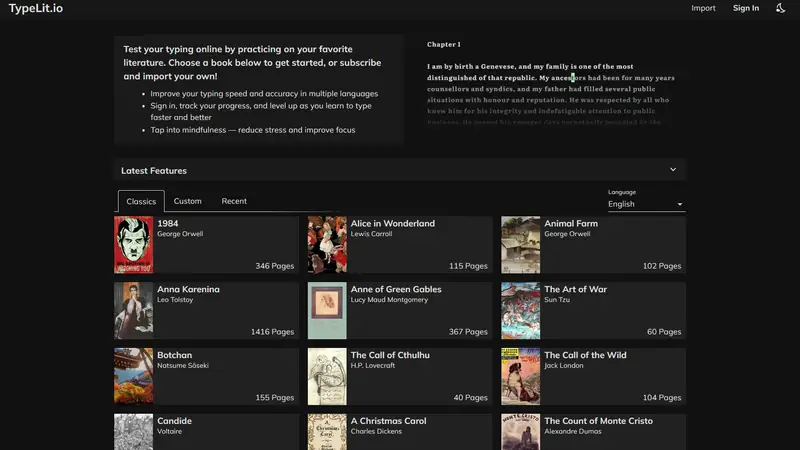
TypeLit lets you practice typing by retyping classic books. Longer passages create a steadier rhythm than disconnected drills, while progress tracking gives you a reason to return.
Choose a text you enjoy. Improving speed is easier when you are interested in the next sentence.
9. The On-Line Encyclopedia of Integer Sequences
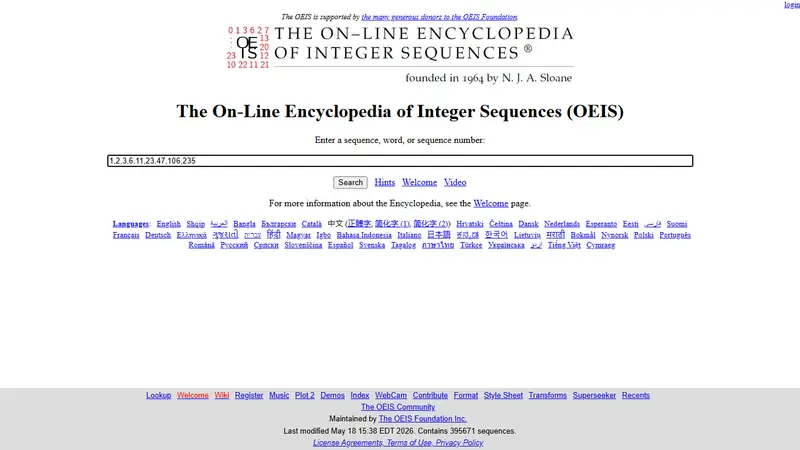
OEIS is a searchable encyclopedia of number sequences. Enter a few terms and the database may identify the pattern, provide formulas, references, graphs, and related sequences.
It is invaluable for mathematics and also an extraordinary rabbit hole for anyone who likes patterns without needing a practical reason.
10. Explorable Explanations
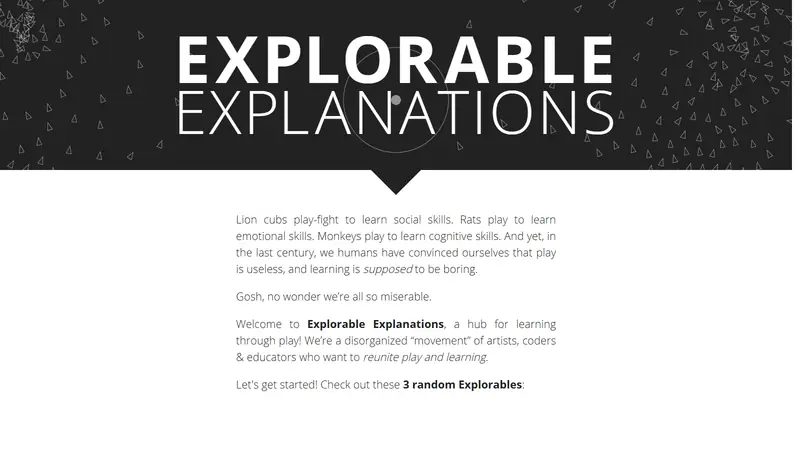
Explorable Explanations indexes interactive articles that teach through models, controls, and direct manipulation. The subject range is broad because the format is the point.
Browse it when a static explanation has failed and you need to change the variables yourself.
11. Bizarre Labs
Bizarre Labs collects classic home science projects, tricks, and amateur experiments. The presentation carries the energy of older science books where curiosity and household materials shared a table.
Read safety notes and use judgment before attempting a project. Old experiments do not always meet current standards.
12. Class Central
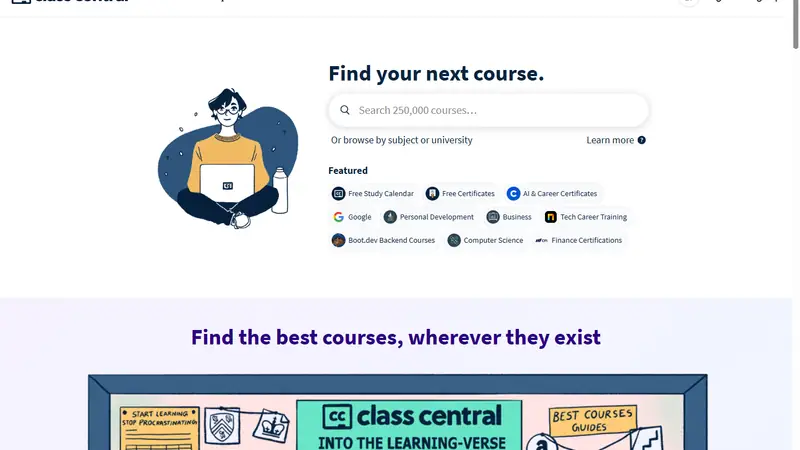
Class Central aggregates online courses from universities and learning platforms. Search a subject and compare providers, schedules, formats, and reviews without visiting each catalog separately.
Use it after a topic has survived the curiosity stage and you are ready for structure.
Choose one thing
Do not bookmark all twelve and call that learning. Open one, spend fifteen minutes, and return tomorrow if it holds up. Our interactive science guide has more models, while useful websites covers everyday tools.